
Comment

Don’t think of it as brand maintenance. Think of it as organic growth.

As an independent consultant, I have the pleasure of partnering with clients months, and sometimes years, after their brand launch. In classic branding terms, we consider this brand maintenance. But there is a fundamental issue with this phrase. Maintenance implies that your brand is static. That we are just need to clean up odds and ends to deliver on the brand. Brands, however, are not set in one point in time. Rather, we need to think of them as fluid entities that evolve, grow and morph with time. Here are some tips to changing the way we manage brands after launch.

Take a moment to listen. The feedback that you get throughout your organization and customers is invaluable. While some criticism of the brand that you worked so hard to launch may be tough to hear, there may be truth behind it. And usually, it can be solved with one small tweak to the brand.

Never stay too rigid to rules set by a rebrand. Rebrands are often a time to put rules in place – to prevent a wild west of branding from product managers, divisions and various regions. But as your organization becomes more sophisticated in branding, it’s important not to stay too rigid to those rules. You may find you can relax them a bit – and transfer power back into the hands of the organization.

Treat your guidelines as living, breathing documents. Photography style guides. Color palettes. Graphic treatments. All of these may require evolution at one point or another. The important thing is to be strategic in how and why you go about changing them.

Businesses change. Industries evolve. Competitive threats emerge. If your brand can’t grow with you, it will fail to be the asset you intended it to be.
Comment

1 Comment

Millennial Branding: Why I'm not betting on 365

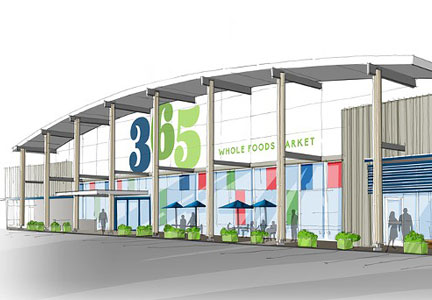
Millennial branding is a challenge that many clients face today. Last week, Whole Foods launched 365, a new marketplace concept geared toward Millennials in Los Angeles, California. Despite all of the fanfare, I’m not placing my bets on 365 to help Whole Foods get out of its slump. Here’s why.

The concept. I struggle with the very notion of a “generational” market. It makes a gross assumption that millennials are too distinct from other customers. In fact, recent research has shown that millennials are far more “like” other generations. They are simply experiencing the challenges and lifecycle events of anyone in their 20s and 30s. There are aspects of the new store concept that are appealing – in particular, a simplified shopper experience with set price points for the market section. But rather than focusing on these as “generational needs”, Whole Foods should have seen these as basic customer painpoints. Perhaps a few small improvements to its flagship experience would have been enough to attract millennials AND created more loyal customers.

The location. Whole Foods picked Silver Lake, or as I call it Brooklyn of the West Coast, to launch its new concept. By doing so, Whole Foods essentially typecast millennials as a generation of hipsters. And the one thing we know about this generation is they don’t like to be typecast as anything. Those millennials who live in Silverlake may feel like sell-outs if they visit 365. And the majority of millennials, who live outside the neighborhood, aren’t going to travel to visit a store that typecasts them as something they are not.

The brand. If you are going to create a new store concept, go all out. But Whole Foods did not do that. It picked its generic brand label as the brand for its new concept store. This decision feels like a classic case of boardroom logic. Whole Foods already owned the trademark. It will be selling 365 products in the store. And 365 has the added benefit of implying a convenience and availability to its customers. However, boardroom logic and branding do not go together. By choosing the most logical name, Whole Foods generic-ized the concept and too closely associated it with the baggage of Whole Foods.

Whole Foods has made a big get with its 365 concept. And I’m sure that Whole Foods did extensive research prior to embarking on such an extensive attempt to reach Millennials. But perhaps what was deemed as a millennial branding problem is actually a customer experience problem is disguise. How much do you really known about Millennials? And what about the pain in your experience?

1 Comment

Comment

The New Brand Architecture Part I – Defining a Masterbrand

There is a long-held belief that when it comes to your brand architecture, a masterbrand is the simplest approach. It saves resources. Reduces trademark costs. Improves recall. However, in today’s digital world, a masterbrand approach may seem simple on the surface, but is far more complex to execute. A masterbrand used to be about creating one name, visual identity and system and broadcasting that to the world. Today, a masterbrand implies so much more. Before jumping to a masterbrand solution, you must consider the implications of a one-brand solution and whether your backend technology can support it.

Your user experience must be the same across products. A masterbrand architecture implies “uniform.” A customer, therefore, expects the same experience across products in a masterbrand scenario. This cannot simply be a skin using your visual identity systems on different user experiences. Nor can it be a single sign on that directs you to different portals with distinct experiences. Rather, the UI and flow must be consistent from one product to the next. Compare Google to Microsoft Office. Google Docs, Sheets etc all share the same user experience. It is simple and seamless, and I expect it to be that way, whereas I don’t have the same expectation when it comes to Microsoft Powerpoint and Excel. While the experiences are somewhat consistent, the subbrand scenario of Microsoft Office also manages expectations that not all will be, or needs to be the same.

Data must be linked across products. We’ve moved from a world of “show-me” to “know-me.” A masterbrand implies that you are leveraging data from one product to another to truly know your customers, serve them better content and improve your product based on it. Consider a stay at high-end hotel chains. If I visit a Four Seasons for my birthday each year, I expect that whichever hotel I book at will already know that it is my birthday and send well-wishes upon my arrival. However, I do not have the same expectation if I stayed at a Westin one year and a W, both Starwood properties, the next.  

You must provide an all-in-one app solutions. Under a masterbrand solution, you must consider storing all of your products in one app for download. Users do not have patience or interest in downloading several apps or toggle between them under a masterbrand scenario. I use Intuit’s Mint for my bookkeeping and TurboTax for my taxes each year. On my mobile device, I need two different apps. Because they are different brands, my expectation is that those experiences will not be linked. But if they were all Intuit branded, my expectation would be quite different.

In today’s digital world, a masterbrand strategy is increasingly difficult to pull-off. Before jumping to a one-brand solution, consider the implications for your customer experience and product development.

Comment

Comment

What's in a name?

Your name says a lot about you. In fact, it is the first impression your customers, investors and prospective employees will have about who you are. So choosing the right name is key to both your brand and business success.

Clients ask – what type of name is right? There are many types of names from which to choose. Descriptive names. Coined words. Real words. Completely made-up words. Which you chose is a matter of style. But when choosing the right type of name, style is not as important as function.

Comment

Comment

The future of Starwood is here

When it comes to brand loyalty, I am a tough customer. Perhaps because brand strategy is what I do, but I am generally skeptical of the promises brands make to me. I am incredibly picky about the brands I am loyal to, and can count on one hand the brands that I truly love. One of them is Starwood and in particular, its Preferred Guest sub-brand.

So I, like millions of others, am anxious to learn what will happen to my beloved brand when it merges with Marriott later this year. And as a brand strategist who has spent years handling brand transitions, I see the writing on the walls.

Comment

Comment

Your Brand Personality: The New Tablestakes

Your brand’s personality is core to defining the tone and style of your communications and experiences.  The problem I find is that today, all brands tend to steer toward the same personality attributes. We need to be clear! We need to be warm! We need to be more human!

New studies show that we judge brands the same way that we judge people. If we apply that notion to your brand’s personality, then we need to ask: “Would you want to be stuck at a dinner party with someone who was cold, fake and inarticulate?”

No. So you’re not going to interact with a brand that behaves that way.

Comment

Some brands have soul. Some don't.

Those that do, are driven from the inside out. But what does inside-out branding look like?

You brand your culture. When it comes to listing your brand assets, most companies focus on external design elements: your logo, typography, color palette and imagery. But perhaps the most under-reported, and under-leveraged, brand asset is your company culture. This starts with your values. Companies that don’t understand the value of a branded culture tend to have values that are tablestakes to any corporate citizenship: innovation, integrity, ethical. But those that do create branded values that differentiate them from the marketplace and serve as the foundation for the promise they make to customers. Think of Southwest – their values Warrior Spirit, Fun Luvin’ Attitude and Servants Heart – are the drivers behind the unique experience you have when you fly on the airline.

You hire your customers. I once had a client that had identified a new target segment: customers who took risks and challenged the status quo were underserved in their industry. My client quickly decided that they could gain market share by targeting their brand to this audience. The challenge: no one at the company embodied a risk-taking or challenger spirit. It’s hard – and nearly impossible - to deliver on a promise if you don’t share a like-mindedness with your customers. Make sure that you hire the customers that you want to attract. They can serve as a source of inspiration and empathy to your experience.

You inspire from within first. Brand building should begin with your employees. Your brand should serve as a lens for not only how you communicate with the outside world but also how you inspire, recognize and reward your employees. A strong engagement plan will not only inspire employees but also empower them to deliver on your brand experience.

Focusing on the inside of your organization will lead to a stronger brand manifested on the outside. How strong is your culture? And how well does it come to life? Conduct a brand health assessment to find out.

Find and build your signature moments

It’s one thing to make a promise, it’s another to deliver on it. Today, more than ever, your brand’s strength lies not in the quality of the logo that you develop but in the experience you create. There is a misperception that brands need to create a wholly unique signature experience – but doing so is not only a daunting (and expensive!) task, it can lead to a very loud brand experience. Rather, the key is to develop a few “signature moments” within your experience. How do you pick the right signature moments for you? Let’s look at one of the strongest brand experiences out there: Virgin America.