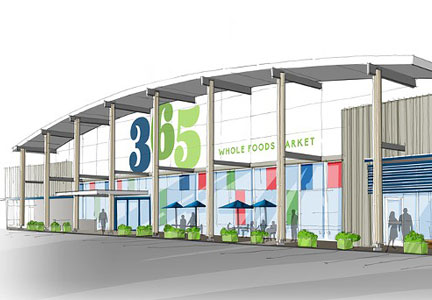
Millennial branding is a challenge that many clients face today. Last week, Whole Foods launched 365, a new marketplace concept geared toward Millennials in Los Angeles, California. Despite all of the fanfare, I’m not placing my bets on 365 to help Whole Foods get out of its slump. Here’s why.
The concept. I struggle with the very notion of a “generational” market. It makes a gross assumption that millennials are too distinct from other customers. In fact, recent research has shown that millennials are far more “like” other generations. They are simply experiencing the challenges and lifecycle events of anyone in their 20s and 30s. There are aspects of the new store concept that are appealing – in particular, a simplified shopper experience with set price points for the market section. But rather than focusing on these as “generational needs”, Whole Foods should have seen these as basic customer painpoints. Perhaps a few small improvements to its flagship experience would have been enough to attract millennials AND created more loyal customers.
The location. Whole Foods picked Silver Lake, or as I call it Brooklyn of the West Coast, to launch its new concept. By doing so, Whole Foods essentially typecast millennials as a generation of hipsters. And the one thing we know about this generation is they don’t like to be typecast as anything. Those millennials who live in Silverlake may feel like sell-outs if they visit 365. And the majority of millennials, who live outside the neighborhood, aren’t going to travel to visit a store that typecasts them as something they are not.
The brand. If you are going to create a new store concept, go all out. But Whole Foods did not do that. It picked its generic brand label as the brand for its new concept store. This decision feels like a classic case of boardroom logic. Whole Foods already owned the trademark. It will be selling 365 products in the store. And 365 has the added benefit of implying a convenience and availability to its customers. However, boardroom logic and branding do not go together. By choosing the most logical name, Whole Foods generic-ized the concept and too closely associated it with the baggage of Whole Foods.
Whole Foods has made a big get with its 365 concept. And I’m sure that Whole Foods did extensive research prior to embarking on such an extensive attempt to reach Millennials. But perhaps what was deemed as a millennial branding problem is actually a customer experience problem is disguise. How much do you really known about Millennials? And what about the pain in your experience?